
There's a moment we recognize immediately.
A message arrives, sometimes months after a tour, sometimes years later. A family who spent three days with us in Barcelona is now planning a longer trip. They want Seville. Maybe Granada. Maybe Madrid. And they write to us because they don't want to go back to what one client called "the superficial experience."
That message is one of the most telling things about how UNICA works.
We are not a Barcelona company that also does other cities. We are a Spain company, with Barcelona as our home base, and a consistent standard of private guiding across the entire country. This article explains what that means in practice, and why it matters when you're planning a serious trip to Spain.
Why multi-city Spain trips need a different kind of planning
Spain rewards depth. The country has eight UNESCO World Heritage cities. The distance between Barcelona and Seville is roughly the same as Boston to Washington D.C. and the cultural gap between them is just as wide.
Most travelers who visit Spain for the first time stick to one or two cities and move fast. Those who come back, and there are many, travel slower, go further, and want to understand what they're seeing.
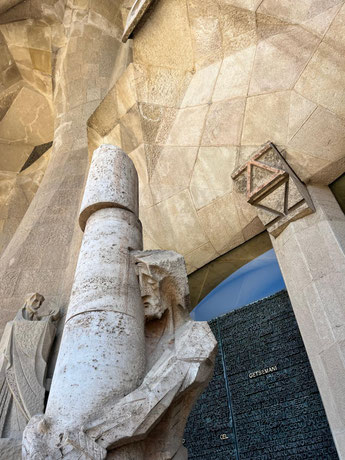
This is where private guiding changes everything. Not because a private guide is a luxury, though the experience is, but because context is cumulative. When you visit the Sagrada Família with a guide who explains Gaudí's relationship with Catalan Modernisme, and then three days later stand in front of the Alhambra with a guide who shows you how Islamic geometry influenced every building that came after it, you're building a conversation with Spain. Not just collecting photographs.
The problem is coordination. Most travelers who want private tours in multiple cities have to find a different operator in each city, negotiate separately, hope for consistent quality, and manage logistics on their own. That friction is real.
What a private guide actually shows you
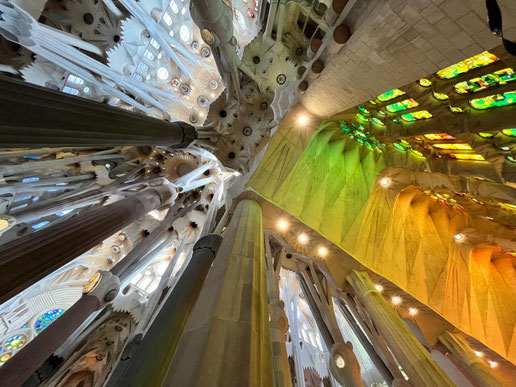
Most visitors to Barcelona's Gothic Quarter walk past certain doors, certain details, certain panels of stone without stopping. They're not to blame, there's no sign, no queue, no obvious reason to pause.
A private guide stops. Points. Explains what you're looking at and why it connects to everything else you've already seen that day and everything you're about to see tomorrow. That's the difference, not access to famous places, but access to the layer of meaning underneath them.
One of our Italian clients, who had never particularly liked the Sagrada Família before visiting with UNICA, described the experience of suddenly understanding Gaudí's architecture as "a journey through time, past, present and future." That shift doesn't happen by reading a plaque. It happens through conversation, with someone who has been living inside this material for years.
What UNICA offers across Spain
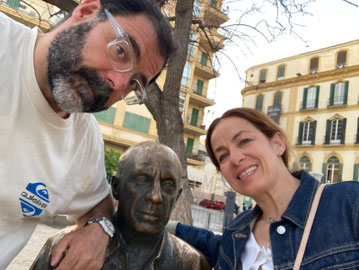
UNICA operates private tours in Barcelona, Madrid, Seville, Granada, Valencia, Córdoba, Málaga, and other Spanish cities, with official licensed guides in every location.
The key word is official. Every guide who works under the UNICA name holds an official license from the relevant regional authority. This isn't a formality, it means your guide has passed rigorous exams in history, art, architecture, and professional conduct. It also means they can legally guide inside sites like the Sagrada Família or the Alhambra, which unlicensed guides cannot do.
Beyond credentials, what UNICA selects for in every guide is something harder to measure: the ability to make a place come alive for the specific people in front of them. Families with teenagers who need a different kind of engagement. Couples who want depth over breadth. Groups of friends who've done the major sites before and want something less obvious.
Jaime and Luana travel to each city personally to meet and work with every guide in the UNICA network. Not a platform, not a directory, a team built on direct relationships. When you arrive in Seville or Málaga or Granada, your guide has been chosen by people who have stood next to them and watched them work.
The results are consistent. More than 420 verified five-star reviews across Google and TripAdvisor — Travellers' Choice on TripAdvisor for ten consecutive years. Clients don't write about the logistics. They write about the guide, and about arriving somewhere they didn't expect to arrive.
Andrew P. visiting from the United States, described touring Barcelona with one of our guides as feeling "as if we were walking around the city with a very good friend who was an expert on The Gothic Quarter, La Pedrera and every landmark in between." He added that the experience was "tailored to our specific interests rather than a standardized generic group tour" , which is exactly the point.
The one-contact, full-Spain experience
When you book a multi-city trip with UNICA, you deal with one team from start to finish.
That means one conversation to understand what you want, before you arrive, via WhatsApp or email, as many exchanges as it takes. One team that knows your group, your pace, what you've already seen, and what matters most to you. One team that coordinates your schedule across cities, manages skip-the-line access, arranges private transportation when needed, and handles it when something changes.
The pre-trip planning is something clients mention often. Stefania B., described the preparation process as "very serious and professional" , noting that the team accommodated a group member who needed a slower pace, gave local restaurant recommendations that avoided tourist traps, and even mentioned the upcoming completion of the Sagrada Família's tallest tower in 2026 as a reason not to miss this particular visit.
That kind of detail, knowing what's happening in the city right now, adapting to the specific group in front of you, giving advice that serves the client rather than the commission — is what makes the difference between a guide and a concierge-level travel partner.
What a real multi-city itinerary looks like with UNICA

Every trip is designed from scratch. There is no standard package. But here is what a 10-day Spain itinerary with UNICA private tours might include:
Barcelona (days 1–3) The Sagrada Família, still under construction after 140 years, and more extraordinary for it. The Gothic Quarter, where two thousand years of Barcelona's history are compressed into a few city blocks, including the Palau del Lloctinent and its Subirachs door. Park Güell, where Gaudí's vision of a garden city lives in ceramic and stone. La Pedrera, whose rooftop warriors are among the most overlooked great sculptures in Europe. Optional day trips: Montserrat, the Costa Brava.
Madrid (days 4–5) The Prado, one of the world's great art museums, overwhelming without guidance, revelatory with it. The Royal Palace. Toledo as a day trip: three religions, one city, a thousand years of coexistence visible in the stones. The literary neighborhood of Las Letras for dinner.
Andalusia (days 6–10) Seville: the Cathedral, the Real Alcázar, the barrio of Santa Cruz. Córdoba and the Mezquita, the great mosque that became a cathedral that remained a mosque that became a cathedral again. Granada and the Alhambra, which requires advance booking and rewards every hour you give it. Optional detours to the white villages of the Sierra Nevada or the Málaga coast.
This is not a checklist. It's a structure that your UNICA guide team adapts to your pace, your interests, and what you've already seen.
Who travels this way
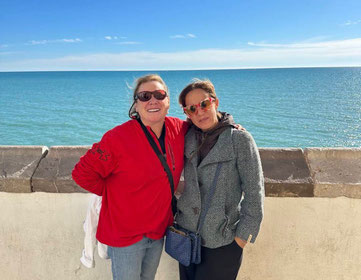
The clients who book multi-city Spain trips with UNICA tend to share a few things.
They've often been to Spain before, sometimes to Barcelona, sometimes to Madrid, and they want to go deeper this time. They travel in small groups: families of four to eight, couples, tight groups of friends. Some arrive by cruise ship and want to make the most of a single day in port. Some are planning two weeks on the ground.
They have a real budget for experiences and aren't looking for the cheapest option. And they've usually arrived at UNICA the same way: recommended by someone they trust.
The recommendation pattern is one of the most consistent things in our fifteen-year history. A client who tours Barcelona tells her sister. The sister books Granada two years later. The sister tells her colleagues. One of them books a full Spain itinerary for her family's summer trip. Nicola B. , who described his UNICA tour as one of the best experiences of his annual European group trips, wrote that he would "absolutely spread the word" before leaving.
This is not marketing. It's the mechanics of trust.
The Gaudí centenary in 2026: why this year is different
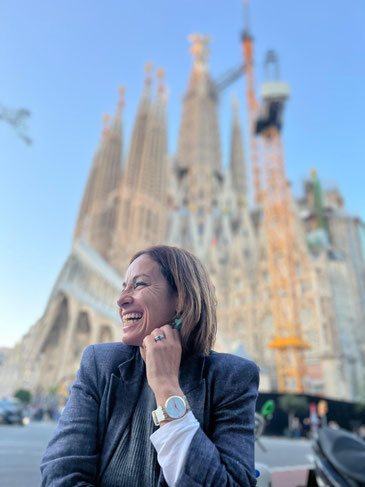
This year, 2026, marks the centenary of Antoni Gaudí's death, and Barcelona has been designated World Capital of Architecture for 2026 by UNESCO and the International Union of Architects.
On February 20, 2026, the final piece of the Tower of Jesus Christ was placed at the top of the Sagrada Família, the tallest tower, the central spire Gaudí designed as the culmination of the entire building. With its cross now in place, the Sagrada Família stands at 172.5 metres, making it the tallest church in the world. A construction that began in 1882 has reached its defining moment.
On June 10, the exact centenary of Gaudí's death, Pope Leo XIV will celebrate a solemn mass inside the basilica and bless the Tower of Jesus Christ from the exterior. It will be the first papal visit to Barcelona in fifteen years.
There is no precedent for what is happening in Barcelona this year. The centenary, the completed tower, the papal visit, it all converges in 2026. If you are planning to visit the Sagrada Família with a guide who can explain what you are actually looking at, this is the year. Just not necessarily on June 10.
Jaime and Luana have been working with Gaudí's architecture for more than fifteen years, regular updates from the Sagrada Família Foundation, continuous training, and daily work inside these buildings. What you get with UNICA goes well beyond any guidebook.
Starting your trip
If you are planning a trip to Spain, whether it's your first or your fifth, and you want to understand what you're seeing rather than just see it, we'd like to talk.
There's no form to fill out. No standard packages to choose from. Contact us directly via our website or WhatsApp, tell us what you have in mind, and we'll design something from there.
That conversation is free. The experience it leads to is one our clients tend to recommend for the rest of their lives.
Contact UNICA to start planning your Spain trip: unicabcn.com
If you are a travel agency and want the best for your clients in Spain, we'd love to hear from you. Several of our longest relationships started with a single conversation.